WHY THIS MYTH, WHY NOW
Because AI arrived in our hands, we treat it differently. Nobody is selling to you in person; it feels like talking to a peer. That is exactly why the guardrails came down. Convenience is real — and sometimes convenience comes with a price.
The parallel I keep returning to is GDPR. It got a bad rap, but it did one thing well: it dragged a problem everyone in IT already knew about into the open. AI is that problem again, amplified, and moving faster than we can regulate. Compare the models of last December with today's — a completely different beast. This is the first time the speed of the technology genuinely outruns our ability to absorb it.
On social media you shared photos and a location. With AI, people share trip plans, contracts, even bank statements.
WHAT HAPPENS BEHIND THE SCENES
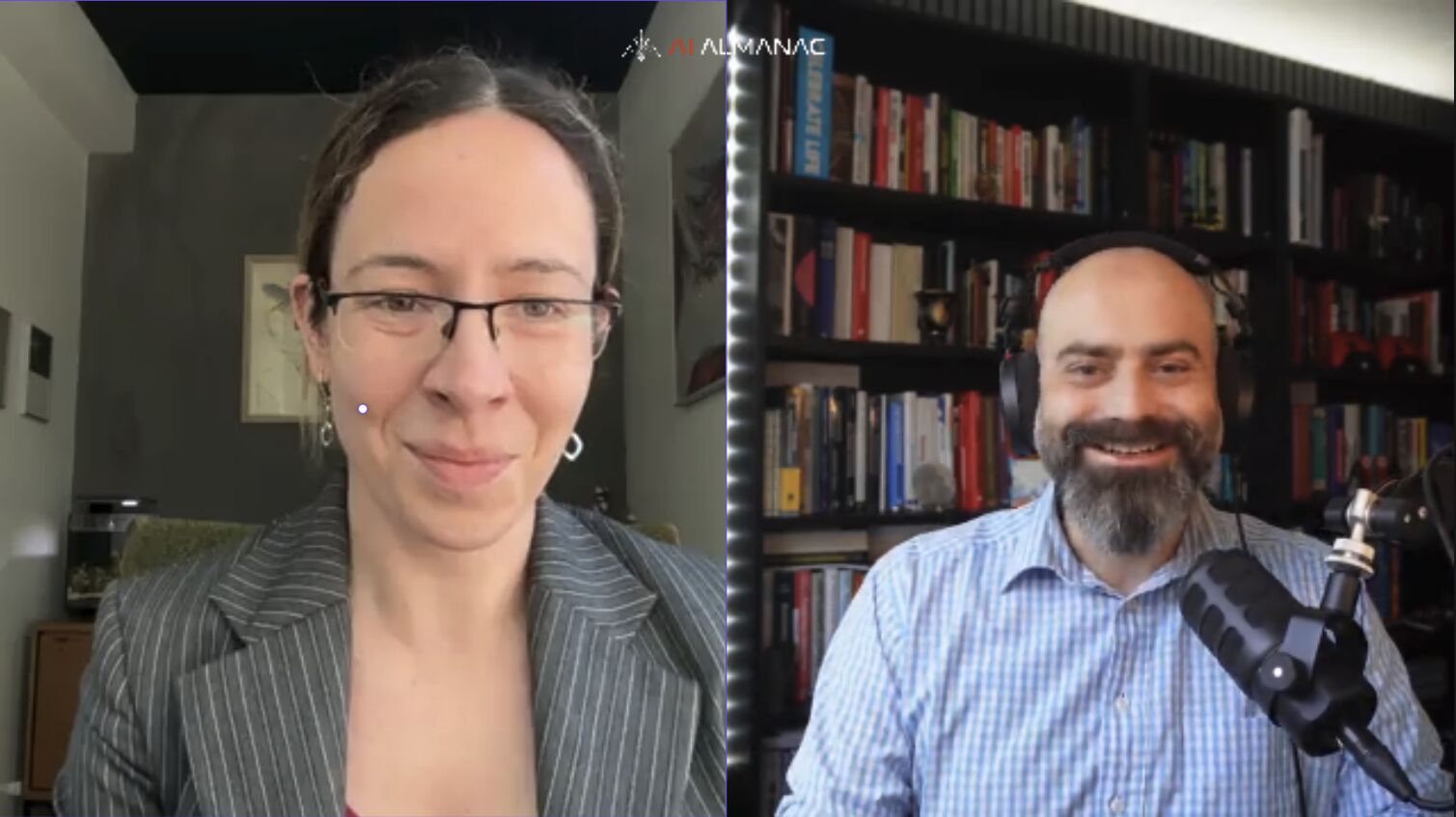
Amir Sabirovic and I went under the hood: what a single interaction with an AI tool actually creates. Where the data lives — does it stay in the Netherlands or cross the Atlantic. Whether the model trains on what you type. Jailbreaking and prompt injection in agent-to-agent setups. API keys scattered across the internet because everyone installed the same experimental tool in the same week.
My own rule from that episode: I'll let AI plan a road trip through seven countries, but it doesn't book the hotels. Booking means my bank card. Planning is delegation; payment is trust. The human stays the final approver.
GOVERNANCE AS ENGINEERING, NOT PAPERWORK
Rolling out a tool is the easy part. We're doing this right now with Cursor for our developers, and "here's a licence, go be productive" is not how the world works. Token usage climbs, bills climb, and neither tells you whether the tool moves the needle. You need the data and analytics layer behind the usage: which work actually improved, where AI created rework instead of saving it, how hallucination and drift are handled before they become a spaghetti mess you pay for later.
If you only look at token usage — an employee burning hundreds of thousands of tokens — is that your best employee? Wrong metric.
THE 90-DAY PATH FOR BOARDS
Asked what a CEO, CTO, CIO or board member should do in the next 90 days, my answer was sequence, not shopping:
- Identify the use case first, then the tool.
- Before purchase: where does the data live, what will it be used for, is the model trained on it.
- No big bang. One pilot team adopts; a second team adapts — security, observability, guardrails, the foundations.
- Expand only after traction. Buy-in beats mandates; a forced rollout of the wrong tool just burns money.
And the questions every leader should ask: Is the model being trained on our data? Where does the data live? How do we define and obfuscate PII? What level of hallucination and drift are the outputs producing — and who owns that number?
THE PART NOBODY TALKS ABOUT ENOUGH: KIDS
We spent most of the hour on business — but the part of this conversation that stays with me isn't the business part. Companies are equipped to absorb AI's impact. They have the knowledge, the specialists, the budgets. Kids don't. AI sits in their hands acting as a friend — always available, always agreeing, handing out advice — and we're only beginning to understand what that does.
So how do we prepare them? Not by crushing their dreams with "AI will replace you anyway." A friend asked me what to tell a twelve-year-old who wants to build games. My answer: train the thinking, not the tool. Curiosity. Questioning everything. The exercise I used to give juniors — write me an algorithm for making coffee — taught edge cases and null checks better than any syntax lesson. That's what transfers to a world where the tools change every three months.
It's also personal in a way that has nothing to do with careers. This podcast is recorded — my voice is now out there, and voice cloning is no longer hypothetical. Schools here are already reverting from tablets back to pen and paper. Critical thinking is the one thing no one can take away from you, it can't be installed later — and it comes from home.
The hope: the younger generation is more critical than mine. They question things my generation simply accepted. In a decade it's on them — and they're better armed than we give them credit for.